


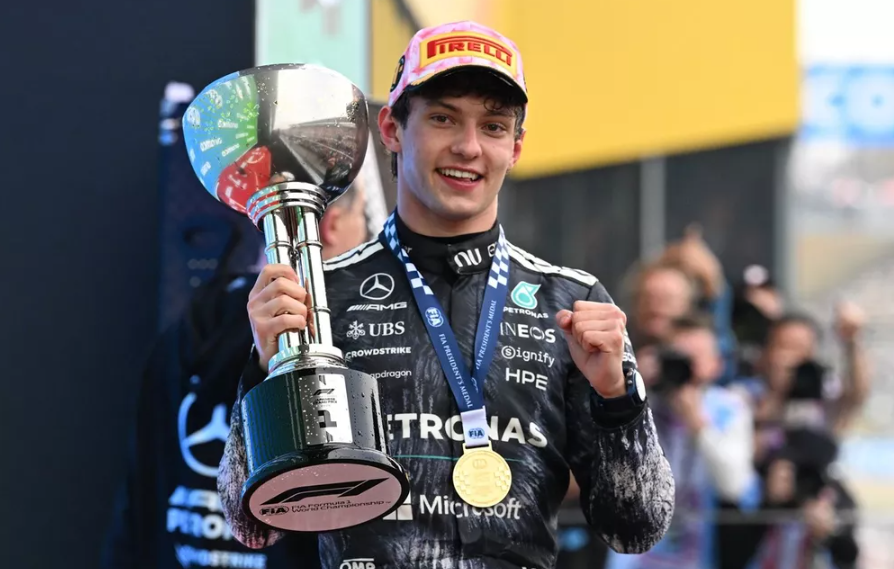
Formula 1 has seen plenty of young drivers come through. But Antonelli’s situation is a bit different from the usual “promising talent gets a midfield seat” story. Mercedes gave him Hamilton’s car. At 18. That’s the full picture, and it still sounds slightly unreal when you say it out loud.
If you follow F1 closely — results, qualifying gaps, how drivers trend across a season — dbbet is worth bookmarking. Good place to track how the paddock actually rates a driver week to week, and Antonelli’s numbers there have been telling.
Bologna, karting, and skipping several steps
Antonelli was born in 2006 in Bologna. Started karting young, as these guys always do. What separated him wasn’t some single standout moment — it was that the results kept coming regardless of conditions, circuit, or competition level. European karting titles, then Formula 4, Formula Regional, then a rapid run through F2 that Mercedes cut short before he even finished the season.
They’d seen enough.
In mid-2024, he tested a Mercedes at Monza. The lap times were quick. More importantly, the feedback he gave the engineers was structured and useful — not something you always get from a teenager in an F1 car for the first time. That test more or less sealed it.
Hamilton announced he was joining Ferrari. Antonelli was confirmed as his replacement within weeks.
First season: what actually happened
The opening races of 2025 were solid. Not spectacular, but solid — which is honestly what you want from a rookie in a car that wasn’t consistently the fastest thing on the grid. Clean stints, reasonable tire management, no obvious panic on the radio.
Then Monza qualifying happened. His home race, Italian crowd going into full tifosi mode for their guy, and he put the car in the barrier on a flying lap. It got replayed a lot. There were a few “too soon?” takes doing the rounds.
He came back the next weekend and drove well. That was kind of the end of that conversation.
Over the rest of the season, the gap to Russell — who’s 27, knows the team inside out, and had a year’s head start on pace in this car — gradually closed. There were weekends where Antonelli had the edge. For a first-year driver, that’s not a small thing.
The Russell dynamic
It’s worth spending a moment on this pairing, because it’s genuinely interesting. Russell isn’t a number two. He’s been pushing for a competitive car for years and he’s not going to roll over for anyone, teammate or otherwise. Antonelli knew that coming in.
Early in the season, Russell was clearly ahead. By summer, it was closer. Neither driver was playing nice — they were both extracting everything the car had. That’s exactly what Mercedes wanted, and it made for a more watchable season than some people expected.
The Mercedes F1 drivers situation next year will be worth following. If the car takes a step forward technically, both of them become genuine contenders. That changes the stakes considerably.
Why the grid looks like this now
Antonelli isn’t the only young driver running near the front. Piastri is 23 and already leading McLaren’s championship challenge. Norris spent a few years being the fast guy who couldn’t quite convert before everything clicked. Leclerc has been at Ferrari since he was 21.
The grid is younger than it’s been in a long time, and the quality hasn’t dropped — if anything, the opposite. The junior programs are more structured, the simulator work is serious, and drivers arrive with a level of preparation that simply didn’t exist ten years ago.
Being the youngest F1 driver on the grid used to come with a grace period. Not anymore. You’re expected to perform from race one.
What the season’s numbers actually showed
Antonelli scored points regularly. He matched or beat Russell on pace on several weekends. His qualifying improved noticeably through the year — early on he was losing time in the final sector on some circuits; by the back half of the season that had largely been fixed.
Development curve pointed upward throughout. That matters more than any individual result. Teams can work with a driver who’s getting faster. They can’t do much with one who’s plateaued.
The competition ahead
Second season is where things get real. The “first year, cut him some slack” window is closed now. McLaren have been consistently fast. Red Bull will reset. Ferrari have Hamilton now, which is its own storyline entirely. Mercedes need to close a gap technically before either of their drivers can seriously challenge for a title.
If they do, Antonelli will be ready on his end. His pace is there. His composure under pressure has been better than expected. The main question is the car.
Where this goes
There’s a version of the next few years where Antonelli is fighting for championships. There’s also a version where development stalls, results plateau, and the narrative shifts. F1 is unpredictable enough that both are genuinely possible.
What’s not really in question is whether he belongs at this level. He’s shown enough in one season to make that case clearly. The rest depends on Mercedes finding the pace to put him in a car that can win — and on him continuing to develop the way the first year suggested he would.
It’s a good story either way. F1 doesn’t always give you those.
