


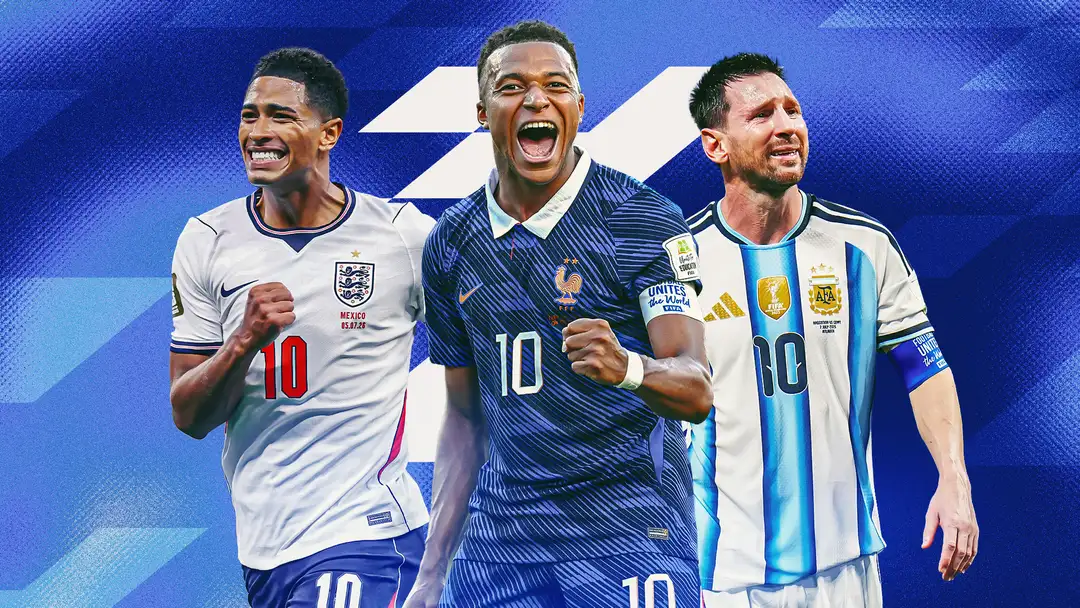
Football’s most significant competitions arrive on cycles that create specific windows of global attention whose combined commercial and cultural weight exceeds any other sporting calendar. The convergence of the expanded FIFA Club World Cup and the approaching 2026 fifa world cup creates the specific historical moment where club football’s ultimate question and international football’s defining tournament exist in unusually close proximity — giving football’s global audience a concentrated period of the sport’s most significant competitive experiences. Fans following both competitions with dedicated markets can find comprehensive coverage at DBbet.
The FIFA Club World Cup: A Competition Transformed
The FIFA Club World Cup’s expansion from a compact seven-team annual event into a 32-team tournament held every four years represents the most significant structural change to club football’s international competition framework in the sport’s modern history. The old format’s limitations were genuine — seven teams, three matches for the winner, and competitive quality that depended entirely on which clubs happened to hold their continental championships in a given year created an event whose prestige was largely manufactured through FIFA branding rather than earned through genuine competitive depth.
The expanded tournament addresses these limitations comprehensively. Thirty-two clubs from all six FIFA confederations competing across a group stage and knockout format creates the genuine global competitive breadth that the competition’s name always implied but the old format could never deliver. European clubs dominate the field’s quality — the twelve UEFA representatives drawn from Champions League performance over a four-year cycle include Real Madrid, Manchester City, Chelsea, Bayern Munich, and Paris Saint-Germain alongside seven additional clubs whose continental credentials justify inclusion.
South American football’s representation — six CONMEBOL clubs including Flamengo, River Plate, Palmeiras, Fluminense, Boca Juniors, and Atlético Mineiro — provides the primary competitive alternative to European dominance that previous editions’ single-team South American representation could never realistically supply. The competitive question at the heart of the expanded tournament — whether European club football’s financial and organizational advantages translate into proportional competitive superiority against the best South American clubs in a genuine tournament format — is one that football has been debating informally for decades without the competitive evidence to resolve it definitively.
The American Host: Why the USA Makes Sense
Hosting the expanded Club World Cup across the United States — with matches spread across New York, Los Angeles, Miami, Seattle, Atlanta, and other major cities — reflects FIFA’s strategic understanding that American football’s growth requires the sport’s biggest competitions to arrive in that market rather than waiting for American audiences to seek competitions out.
The specific stadiums hosting Club World Cup matches — MetLife Stadium in New Jersey, Rose Bowl in Pasadena, Hard Rock Stadium in Miami — provide world-class infrastructure whose capacity and broadcast quality meet the requirements that FIFA’s most significant competitions demand. American venues’ familiarity with hosting major events — the Super Bowl, major concerts, international rugby — creates the organizational competency that smooth competition delivery requires beyond simply providing adequate physical space.
The commercial logic is equally clear. Formula One’s American growth — accelerated by Drive to Survive and the Las Vegas Grand Prix — provides the template that FIFA is attempting to replicate through high-profile event presence in American markets. Bringing the world’s best clubs to American cities where football’s fanbase has been growing fastest creates the specific market development opportunity whose timing aligns with 2026’s approach in ways that make the hosting decision strategically coherent beyond simply finding adequate facilities.
FIFA Club World Cup: Favorites and Competitive Scenarios
Real Madrid enter the expanded fifa club world cup as the competition’s most credible favorites — a constructor of sporting excellence whose Champions League record, squad depth, and specific tournament experience under maximum pressure creates the competitive profile that knockout football rewards most reliably. Their ability to produce results when performances are below their best — the specific Real Madrid quality that Champions League history has documented across multiple comeback victories in knockout rounds — makes them particularly dangerous in a format where a single bad day can end any team’s campaign.
Manchester City’s systematic approach under Guardiola — whose tactical preparation for specific opponents is unmatched in contemporary football — provides the primary alternative European championship case. Their chance creation volume and defensive organization create the performance floor that tournament success requires alongside the ceiling moments that individual quality generates.
Among South American contenders, Flamengo’s attacking quality and Palmeiras’ structural defensive organization represent the most credible non-European threats — clubs whose Libertadores campaigns have demonstrated that competitive preparation at continental level produces performances capable of challenging European opponents that financial comparison alone would suggest are definitively superior.
World Cup 2026: The Tournament That Will Define an Era
The world cup 2026 represents the largest FIFA World Cup in the tournament’s history — 48 nations competing across the United States, Canada, and Mexico in a format expanded from 32 teams that creates both broader geographic representation and the specific competitive questions about whether the expanded field maintains the quality that football’s ultimate competition requires.
The three-host model — the first World Cup shared across three nations — creates logistical complexity whose management FIFA has been preparing across the years since the hosting rights were awarded. American stadiums across New York/New Jersey, Los Angeles, Miami, Dallas, Seattle, San Francisco, Kansas City, Houston, and Philadelphia provide the primary competition venues whose combined capacity and infrastructure quality justify the competition’s American concentration. Canadian fixtures in Toronto and Vancouver and Mexican matches in Mexico City, Guadalajara, and Monterrey complete the geographic distribution whose breadth creates travel and scheduling challenges that previous single-host World Cups did not face at comparable scale.
2026 FIFA World Cup: The Expanded Format’s Implications
The 2026 fifa world cup’s expansion to 48 teams creates specific competitive implications whose effects on the tournament’s character are still being debated within football’s analytical community. The additional 16 nations — bringing teams from previously underrepresented confederations whose qualification now requires performing against fewer elite opponents — raises legitimate questions about whether the group stage’s competitive quality can be maintained when the field’s bottom quarter includes nations whose gap to the tournament’s elite is genuinely significant.
The format response — three-team groups in the initial stage before a round of 32 knockout phase — creates mathematical complexity and the specific third-place qualification scenarios that three-team groups produce. Avoiding the two-nation collusion that three-team final matchdays historically create requires scheduling the final group games simultaneously — a logistical requirement across 16 simultaneous venues that the three-country hosting arrangement complicates.
The expanded African allocation — nine guaranteed spots from 2026 — reflects both the continent’s 54-nation membership and the recognition that African football’s talent depth justifies representation beyond the historical five-team allocation. Morocco’s hosting of the 2030 World Cup alongside Spain and Portugal creates the continental football momentum whose 2026 expression through increased African representation reflects.
Key Storylines Connecting Both Competitions
The specific players whose performances at the Club World Cup will shape the narratives arriving at the 2026 World Cup create the connective tissue between the two competitions that summer 2025 and summer 2026 place in unusually close proximity.
National team coaches monitoring their players’ Club World Cup performances receive competitive intelligence about form, fitness, and readiness under tournament pressure that domestic league seasons cannot provide at comparable intensity. A player who performs brilliantly for Flamengo against European opposition at the Club World Cup arrives at his national team’s World Cup preparation with specific competitive evidence that enhances his case for crucial starting positions.
The tactical learnings from the Club World Cup — how South American pressing systems adapt to European possession football, how defensive organizations from different tactical traditions cope with the specific attacking patterns that the world’s best clubs deploy — feed into national team preparation cycles whose analytical staff monitor the competition as the most valuable competitive intelligence exercise available before the World Cup’s own planning finalizes.
Why These Competitions Matter Beyond Football
The convergence of the expanded Club World Cup and the 2026 World Cup creates the specific historical moment that global football experiences once per generation — a period where the sport’s largest competitions arrive in sequence in the world’s most commercially significant market.
American football’s growth trajectory — from the niche cultural interest that preceded the 1994 World Cup through the established major league professional competition that MLS now represents, the college soccer programs whose participation depth creates the grassroots foundation that sustainable football cultures require, and the social media engagement whose generational demographics suggest continued growth — creates the audience whose experience of hosting the world’s biggest competitions will shape their relationship with football across the decades that follow. FIFA’s investment in this market through competition hosting reflects strategic understanding whose payoff timeline extends across multiple World Cup cycles rather than delivering immediate commercial returns whose measurement would justify the hosting complexity that the three-nation arrangement creates.
